Atlanta, GA
September 1, 2026
The fuss over Lake Ontario may seem like another dumb distraction. In a way, it is. But its essence is serious, particularly because many people involved are acting so frivolous.
As with everything Donald Trump does, his tariff “policy” made a mess. During his deteriorating disaster in Iran, the president decided it was a good time to pick a fight with America’s largest supplier of foreign crude.
He imposed exorbitant taxes on Canadian imports, and apparently assumed the complaisant Canucks would kindly pay them. Instead, like daylight after dawn, they reciprocated with tariffs of their own.
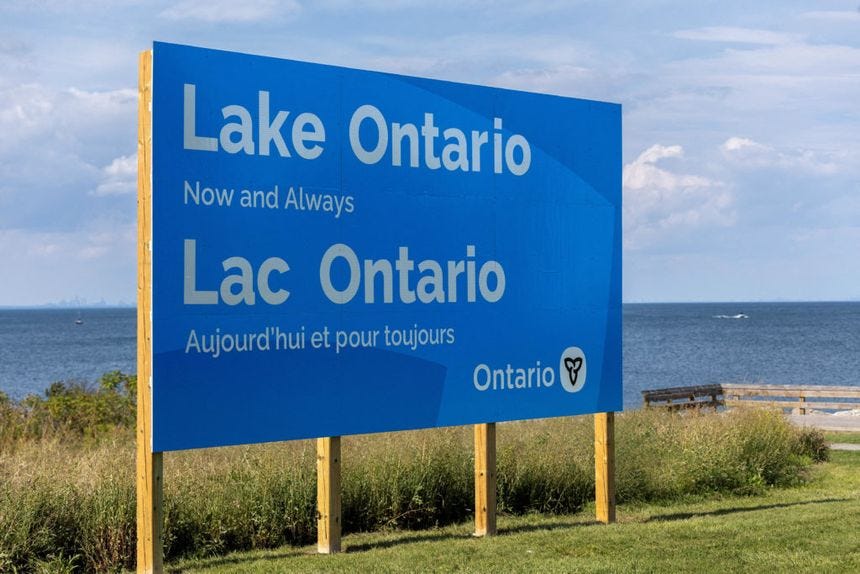
Offended by this impertinence, the president pitched a fit. He rechristened Lake Ontario “Lake America”, and stuck it to the Canadians by removing a name George Washington formally acknowledged before Canada existed. Seventy years later, the province was named for the lake, not the other way around.
The upshot of the spat is that both governments raised taxes, and Donald Trump gave a lake a new name almost everyone will ignore. The only shock is he didn’t name it for himself.
Pervasive Flux
Aside from the harm inflicted by cross-border acrimony, stupid tariffs, and the impact on countless businesses with “Lake Ontario” in their names, this all seems silly. In isolation, it would be.
As Republicans recognized when Barack Obama unilaterally renamed Mt McKinley (and ignored when Donald Trump issued an order changing it back), there’s nothing conservative about whimsically replacing names people have always known. That’s what revolutionaries do.
This is the reason real conservatives are rightly outraged when malcontents rename mountains, remove monuments, or replace holidays that traditionally honored local heroes or American icons.
Like the Gulf of Mexico, Lake Ontario was named long before the United States came along. In both cases, European explorers applied appellations derived from native words. For about four centuries, the names have stuck with no clamor (or thought) to change them.
As with most of what governments do, random relabelings are petty “solutions” that create their own problems… most of which aren’t recognized right away. If nothing else, they become political ping pong balls that keep crossing the net with each change of power. Such pervasive flux is what a federal republic of divided powers was meant to minimize.
Chaos is sometimes defined as order not yet understood. Maybe. But much of it is induced by government. When it is, it’s usually just mayhem.
An underlying angst pervades this century. Most people crave predictability and covet familiarity. They recognize change as inevitable, and usually welcome. But they prefer it come gradually, if not imperceptibly.
Spontaneity can be fun, but some stability is essential. An occasional rain shower is refreshing. Even a thunderstorm can be soothing. But hurricanes are overwhelming, especially when they hit every day.
For almost three decades, we’ve incessantly been told to head inland and put up the plywood. Panic, hysteria, and hyperbole have defined much of this period.
“Terror Alerts”, “If You See Something Say Something!”, “Flatten the Curve!”, “We’re All in This Together!”, “Save the Planet!”, “There’s No Time to Wait!”.
Everything is an exclamation point. Skepticism and questions are dismissed as “denial”, of inducing danger by minimizing the “crisis”.
It’s all exhausting and disorienting, a constant “state of emergency” punctuated by periodic declarations from the entity that accrues power when emergencies exist (as I discussed a few years ago here).
As with covid lockdowns, bombing campaigns, applying a tariff, or renaming a lake, a decree is issued and a new policy is imposed. That’s it. There’s no debate, deliberation, or vote.
What “the people” want is irrelevant, so they’re never even asked. And for all they know, tomorrow (and certainly on the first day of the next ruler’s term) everything might be different. This epitomizes what Robert Higgs called “regime uncertainty”.
Charred Remains
There’s a reason the US Constitution requires every state to have a republican form of government, that the Legislative branch must pass laws, and that the document itself is difficult to amend.
Americans aren’t meant to be governed by judicial decrees, executive edicts, or strokes of a pen. But now many accept (or applaud) arbitrary orders to rename lakes, impose taxes, implement lockdowns, or launch wars (actually, wars don’t even warrant an edict. Presidents just start those, then announce they’re underway once they’ve begun).
Congress yawns and the states sit silent. Rather than let leaves gradually wither and trees occasionally topple, they watch executives use ink to ignite fires, and then point fingers of blame over the charred remains.
Capriciously slapping “America” on lakes and gulfs is like putting “Liberty” and “Freedom” on skyscrapers, army bases, and postage stamps. Whatever misplaced cheers these comforting abstractions might elicit, they remind us less of what we should preserve than of what’s already been lost.
JD


Yep them thar words "I am from the government and am here to help" Wish We could help with much less government!