


Atlanta, GA
June 24, 2025
The War Party is pointing, laughing, and gloating… ridiculing skeptics of Iran attacks for being wrong, as if warning against war isn’t prudent.
Its proponents want to embed the notion that it’s more reckless to doubt armed intervention than to promote it, and that minding our own business is a greater danger than butting into everyone else’s.
But the burden of proof is always on those who urge war. That’s why the framers of the Constitution demanded such consequential action be debated in Congress, and be undertaken only after that body declares war.
Semantic Somersaults
Regardless its tactical merits, the attack on Iran lacked such sanction and was therefore illegal. The president has no Constitutional authority to start a war. That’s why some “conservative” influencers resort to semantic somersaults that would make Bill Clinton blush:

How is this different from “I. Did. Not. Have. Sex. With. That. Woman?” I suppose that depends on what your definition of “is” is.
Article II, Section 2 states the President "shall be Commander in Chief of the Army and Navy of the United States, and of the Militia of the several States, when called into the actual Service of the United States.”
Only Congress can call the military into “actual service of the United States” - by declaring war… which Congress hasn’t done since WWII.
The armed forces are not the president’s personal plaything. He can’t commit them to airstrikes, invasion, attack, or battle without Congress calling them to service by declaring war. The Constitution wasn’t written in hieroglyphics or Morse Code. This isn’t complicated.
There are no exceptions for “emergencies” (a word not found in the Constitution) or extraordinary circumstances. The War Powers Resolution of 1973 didn’t override this requirement. That wasn’t a constitutional amendment, and doesn’t supersede the original document.
If anything, it was a feeble (and unconstitutional) attempt to restrain rogue presidents by requiring them to inform Congress before initiating hostilities. In essence, it’s an illegal law. Congress can’t delegate its power to the president.
Symptom of the Disease
But Trump didn’t even abide by that act. He didn’t notify Congress he was attacking Iran. As with his strikes on Yemen a few months ago, he just did it.
Like other modern presidents, this one is merely an acute symptom of a festering disease. Like all others this century (and most in the last one), Trump violated his oath by launching attacks without Congressional approval.
Like those predecessors, Trump should be impeached for this. If waging unauthorized war isn’t an impeachable offense, nothing is.
He won’t be, for the same reasons Biden, Obama, Clinton, and the Bushes weren’t. Congress generally approves of these discretionary wars, but wants to shun responsibility for starting them.
By offloading accountability onto the executive, members avoid smudging their name with the stain of a vote. They’ll happily take vicarious credit if attacks happen to go well, yet dodge blame when they invariably go bust.
Will this one? Who knows? We’re not even sure what “this one” is.
While Trump kept Congress out of the loop, he and the Iranians reportedly kept each other informed, providing advance warning of their respective attacks. The Iranians removed their uranium before the Americans attacked. The US cleared its base in Qatar before Tehran did.
Is this true? I don’t know. Except for those making this mess, no one does. But it’s a weird war in which antagonists provide advance notice of impending attack.
In the sad saga of our government’s endless wars, perhaps this theater is just for show? I hope so. But what happens when someone forgets his lines or refuses to play his part?
It’s Own Foil
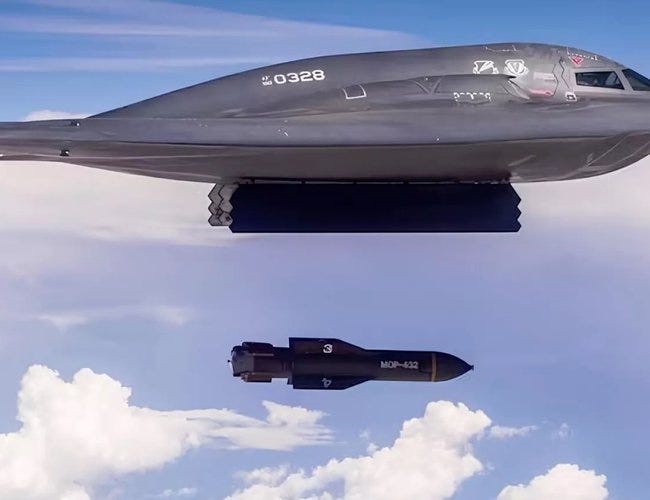
After two decades of military disasters wasting trillions of dollars and millions of lives, some of us worried that attacking Iran could be catastrophic. Perhaps President Trump proved us wrong.
But I doubt it.
The quality of a decision isn’t a function of its outcome. Reckless choices can occasionally work out. Wise ones will sometimes flop.
Yet each potentially sets a precedent, by instilling welcome humility or reinforcing unwarranted hubris. Like a kid who wins big on his first trip to the casino or multiplies his money on his maiden stock pick, “victory” can be its own foil.
With any luck, Israeli lackeys and their war stooges were right that this crisis has subsided after some token bombings. But even if that’s correct (and we hope it is), the US government took extraordinary risks for little reason.
Iran had no nuclear weapons and wasn’t a threat to the United States. With no declaration from Congress, the president jeopardized the security of soldiers and citizens to thwart a regime that posed no threat to the American people. And (for what it’s worth) he wasted more resources and weapons to do it.
Who knows what happens from here? After one week of the Iraq war, its cheerleaders were sipping Champagne and slapping backs. A few years later they were making excuses and issuing apologies.
That’s not unusual. Wars often open with appealing plots to suck us in. Then come surprise twists and unforeseen endings. Like a clear dawn on the slopes of Vesuvius, initial impressions can be deceptive.
Before Salamis, the Persians seemed set to throttle the Greeks. Who thought the Romans would overcome the Carthaginians after Cannae?
What were the prospects for independence when Washington was cornered on Long Island, or when the British captured Philadelphia and plundered the South? After the Battles of Manassas (both of them), Southerners confidently cheered the defeat of the Yankees. Until Vicksburg and Gettysburg, it seemed likely Lincoln would lose his abominable war.
When considering any interventions, the Second World War is the historical example our modern jingoists insist we reference, as if the best analogs for assessing the country between Afghanistan and Iraq are… Nazi Germany and Imperial Japan.
Fine.
How did “the Good War” look a few months in? Was the summer of 1940 a reliable harbinger of what was to come? What about two years later? How many Germans were high-fiving in the Reichstag when Hitler’s army reached the Don?
Altho’ we’re supposed to forget the Iraq War (or assume it’s irrelevant to what might happen next door), confidence overflowed within days of that invasion. It wouldn’t last.
A Healthy Impulse
By its nature, war is uncivilized… and unpredictable - even after it ends. The First World War was causing carnage long after the Treaty of Versailles. It still is.
Even if deemed necessary, military force should be used reluctantly, soberly, and constitutionally. Scoffing at those who hesitate to deploy it is unseemly, if not insidious.
Urging action that can result in human displacement, loss of life, and destruction of property should be done without relish, and with respect for those who warn of the risks. Only savages demean anyone wary of war, especially after our catastrophic catalogue of disastrous interventions.
For decades, we’ve witnessed not only how our government sacrificed soldiers and imperiled civilians to seize control of the Middle East. Domestically, we’ve also watched it waste our wealth, monitor our movements, close our businesses, restrict our travel, grope our groins, and coerce unproven elixirs into our arms… all in name of keeping us “safe”.
As the dollar deteriorates, the economy crumbles, unknown migrants proliferate, and cities degrade into drug-addled cesspools, some of us think bombing distant backwaters mightn’t be the best use of our dwindling seed corn.
Being anti-war… like opposing “climate” scams or resisting covid outrages… is a healthy impulse. In each case, the enemy is the same entity: our own government. It hasn’t earned our trust. Withholding it should be our default position.
But the most ardent advocates for this war tend to be the same “conservatives” who (rightly) question the domestic overreaches of our overlords in Washington.
Many justifiably opposed the covid lockdowns this same government (this same president!) green-lighted five years ago. Yet they now question the “loyalty” of those (including Thomas Massie, the most principled member of Congress) who dare doubt the leader’s wisdom.
Reasonable Response
Predictions, as the quip has it, are perilous… especially regarding the future, and particularly if you assume the future is already here.
Like George Bush unfurling a “Mission Accomplished” banner on an aircraft carrier, those who advocated these attacks may feel vindicated… for now. But time has a way of making us humble.
When asked the impact of the French Revolution almost two centuries after it occurred, Zhou Enlai famously (and perhaps apocryphally) responded, “it’s too soon to say.”
Three whole days after US bombs hit Iran, as war-hawks slam dunks and spike the ball, that remains a reasonable response while we wonder what’s next.
JD
Your remarks about war make clear that they each have consequences some of which unfold years and years after the conflict ended.
For example, the Treaty of Versailles -- that officially ended WW I-- set the stage for WW II.
Others, like US conflicts in the middle east, had their roots in a long ago decision to help create a country for Jewish survivors of WW II
Iran, however, seems to be a special case.
The enmity by which our governments over the years have been held by many Iranians owes it origins to our Eisenhower-era CIA for forceably replacing the democratically elected leader of Iran with our hand-picked puppet.
Fast forward: Iran -- a nation of mostly Shiite Muslims -- is for reasons that elude me today regarded as the champion of mostly Sunni Muslims feuding with Israel for displacing Palestinians.
Iran is in a tough neighborhood too. Nearby Pakistan, India, Israel each have hundreds of nuclear weapons. Each country acquired them to ensure they would not be attacked.
Trump's foolish attack on Iran, and Israel's far more effective one, will only intensify Iran's quest to become a nuclear power. It's just a matter of time.
Hopefully, when MAD (Mutually Assured Destruction) is achieved, diplomacy will at last take the center stage
The idea that, even if this is actually an amazing The Greatest peace deal ever, the correct response was “Just trust this secret extra-constitutional murderous expenditure of billions of your dollars or you’re a cuck,” and that “See, we told you that this *see above* would all be cool, loser!” is some kind of superlative dunk is insane.
Don’t make me go to a No Kings rally, dammit