


Panama City, Panama
April 28, 2024
A gentle breeze refreshed Plaza Bolívar.
Along one side of the square looms the 17th church of San Francisco de Asís. On the other, beneath the monument to Simón Bolívar, was our al fresco table. Separate menus offered options from three restaurants.
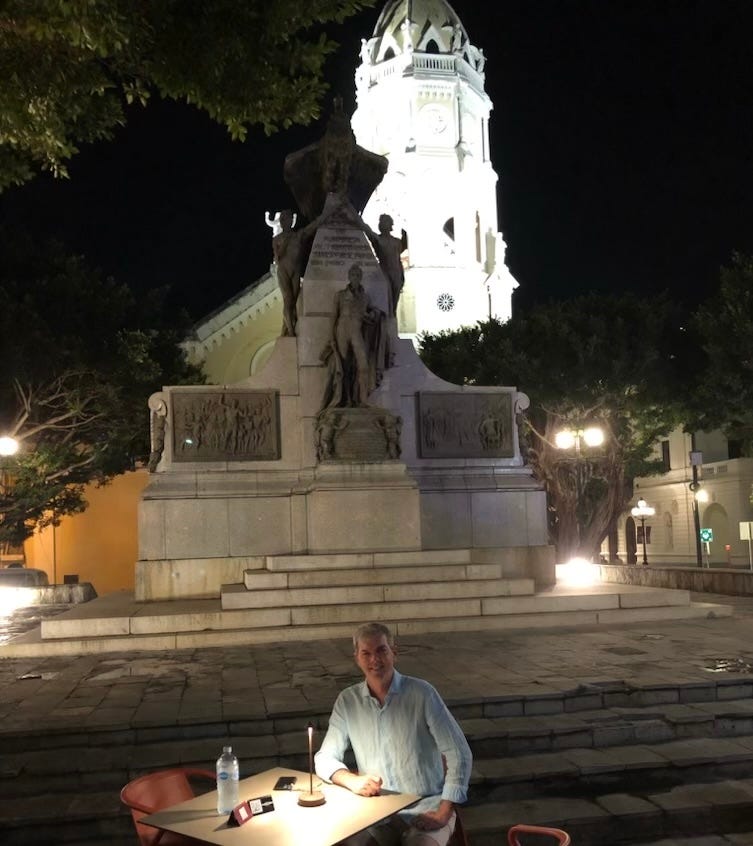
One, Casablanca, featured a “Catch of the Day”…but our waiter had to confirm what it was. By the time he did, I’d already placed an order from one of the other restaurants.
When I learned the catch was corvina, I kicked myself. Before coming to Panama, an uncle assured me the corvina served here are among “the most delicious critters in the sea.”
Unfortunately, my original order was already being prepared.
“Order the corvina anyway,” my wife suggested.
Unsure whether I wanted to pay the added expense for a second meal I’d probably be too full to finish, I was reluctant.
“Oh come on”, she said. “We’re here. Who knows if we will be again? Worse case, you don’t finish it.”
As we luxuriated in the inspiring aura of an enchanting square, my wife convinced me. I had to see if my uncle was right.
Piles of Stone
This morning - like every morning - the Panamanian air was thick and heavy. Inhaling it is like trying to breathe thru a wet sponge. But for most of the time we’ve been here, clouds shielded the sun, making the temperature somewhat tolerable.
I had most of Thursday to myself. I began exploring by going back to the beginning, paying a visit to the site of Europe’s first settlement on the Pacific coast.
Panama Viejo is an archaeological site, piles of stone preserved for posterity. But after recent reclamation and refurbishment, several structures stand out.
Records reveal human habitation extending back a millennium and a half. It wasn’t till the sixteenth century that the Spanish arrived.
Among the remnants of their initial outpost are the shell of what was once a Shrine of the Immaculate Conception, and ingenious underground cisterns the Concepcionist sisters constructed to capture water from frequent floods. As a civil engineer, I found these fascinating.
Up the road, the relatively well-preserved Cathedral tower anchors the Plaza Mayor. Part of Panama’s first church, completed in 1626, the edifice contradicted canonical convention by orienting its apse toward the ocean rather than to the east.
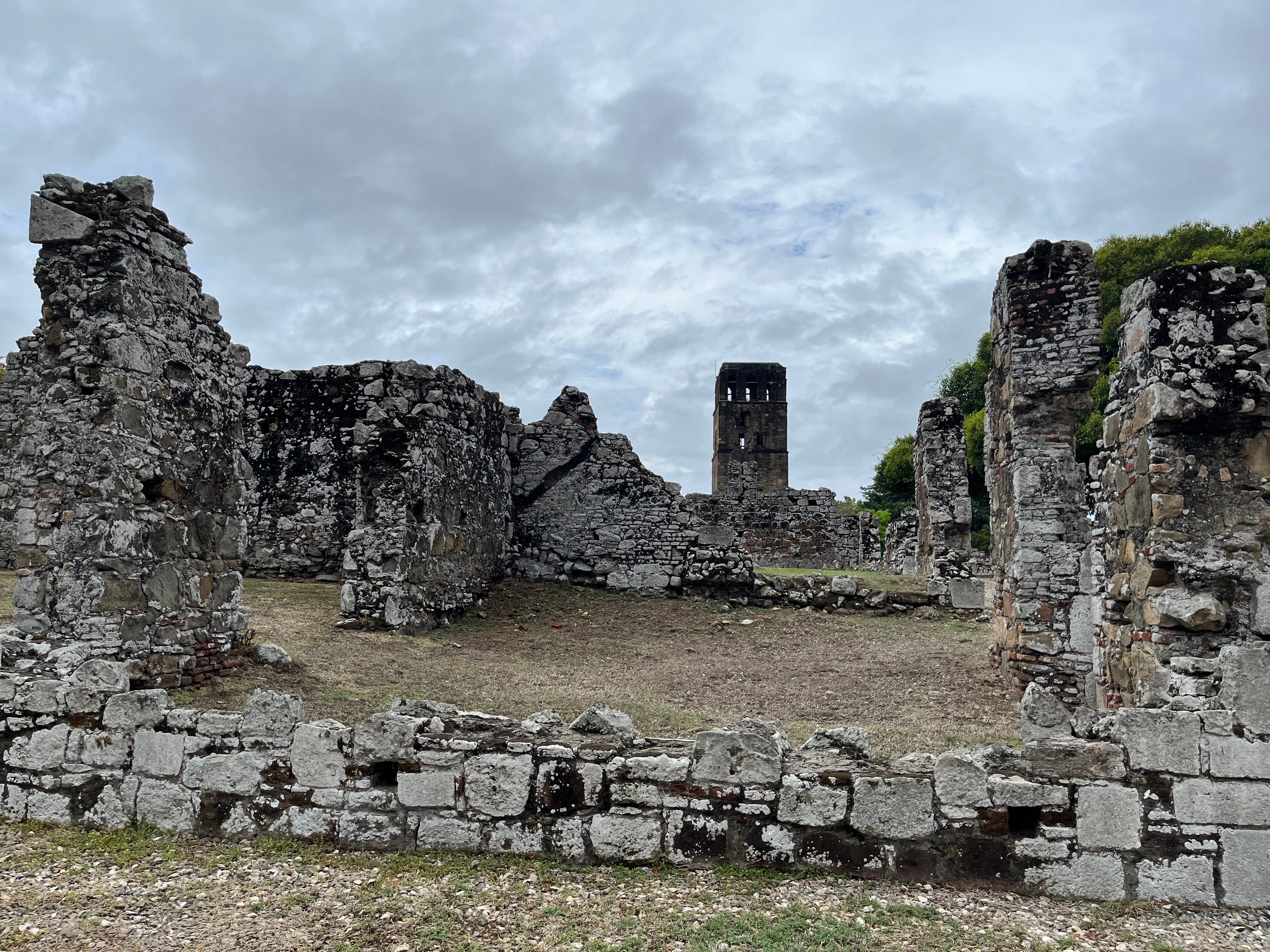
In 1671, as Henry Morgan and his English pirates approached, the village was set ablaze. From the rubble, inhabitants relocated up the coast and across the bay, to what’s now known as Casco Viejo.
After spending the morning in Panama’s oldest area, I started the afternoon at its newest.
Choppers and Yachts
Ocean Reef rises from a small island a block from our hotel. As one description put it, “the man-made islands of Ocean Reef are a marvel…. it’s going to be the most exclusive community in Latin America.”
Attached to downtown Panama City by a causeway, the 5-star luxury of this elite enclave is available to only 500 families. Construction is still underway.
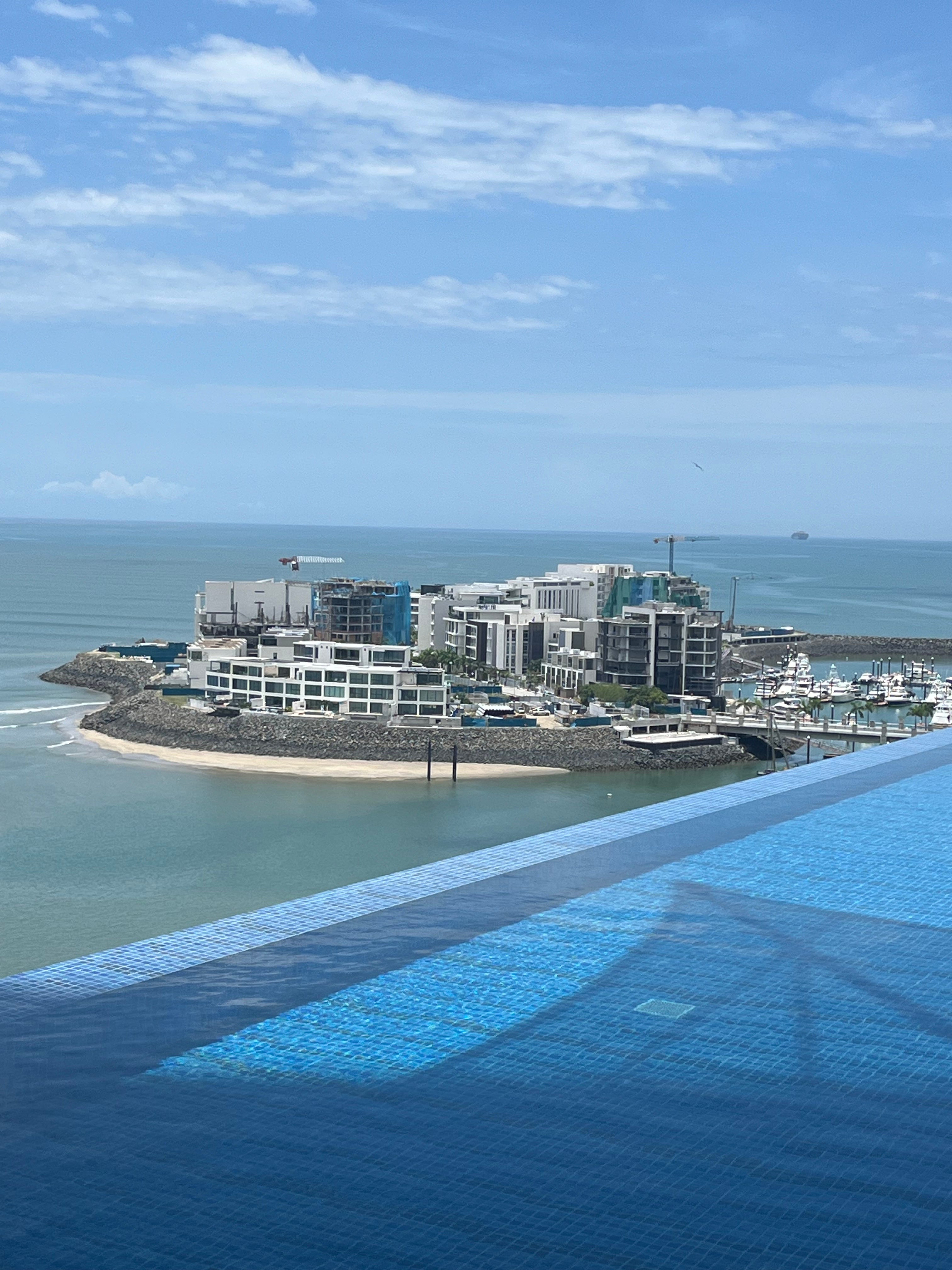
The marina is complete and most of the real estate is already sold, almost all to people who couldn’t care less what they paid. Many residents will access this area by chopper or yacht.
I was unable to do so on foot. I approached as if I were an intruder at Davos, or an interloper at Bilderberg. When the sentry saw me, he popped ominously from his post. With a knowing nod, I reversed course, and headed into town.
Safe Haven and Global Hub
Panama City has fewer residents than many American counterparts. Metro Atlanta has more people than the entire Republic of Panama.
But with more of them packed in the center, Panama City feels a lot larger. A bustling city, dense with new construction, heavy traffic, and a cacophony of car horns, it’s more impressive than beautiful.
The center seems (relatively) safe. Where I walked…from Punta Colón to Iglesia del Carmen…I never felt threatened. El Centro isn’t dilapidated, just nondescript…and often gritty. There’s ample luxury spiced with seedy scenes.
Things are sketchier beyond the core. Trash and crime fill the shanties, slums, and ghettos (many named for Catholic saints) that pock or surround the city.
A “black market” for drugs and prostitutes (both of which are legal) sits just outside Casco Viejo, the charming district where I deliberated over dinner.
Panama’s location makes it a conduit for human smuggling and trafficking, with migrants and victims funneled from around the world thru the Darien Gap, into Central America, thru Mexico, and to the States.
Downtown architecture is mostly modern…concrete, steel and glass. Based on buildings exceeding ten stories within a given area, Panama City has one of the twenty-five “best” skylines in the world. Looking around, that isn’t hard to believe.
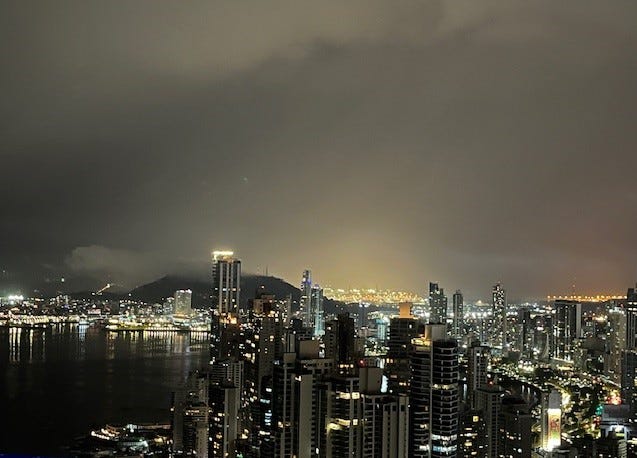
Much of it rose in the last two decades. In the interim, the town has cemented itself as a financial safe haven and global trade hub. It apparently aspires to be a Latin Singapore. So far so good.
After strolling a couple miles along Avenida de Balboa, I turned inward from the water, and wandered into town. I made a quick stop at Noel Petite Cafe for agua fría and café con leche. Refreshed and fortified, I resumed my walk.
Moments for God
After a couple hours wandering amid commercial centers and the Financial District, I set mammon aside, and made moments for God.
The neo-Gothic Iglesia del Carmen is a welcome contrast…visually and spiritually…to the modern surroundings in which it’s immersed. The building itself is relatively new. Finished in the 1950s, it’s like an architectural refugee that barely escaped the Modernist coup.
The façade features intricate carvings beneath twin spires that recall Medieval cathedrals. The composition is a serene contrast to its hectic surroundings, compelling the faithful toward its sublime sanctuary.
Inside, stained glass sheds ethereal light, illuminating delicate craftsmanship within the quiet nave. I knelt for a moment’s prayer, finding passing peace as the sound of traffic ebbed away.
My next stop was another sanctuary. The Parish Shrine of the Immaculate Heart of Mary sits a few blocks away. Another jewel of recent vintage, the church is celebrating its Diamond anniversary.
The entrance is adorned with a statue of Pope Pius XII crowning Our Lady as Queen of the World, consecrating the world to the Heart of Mary in the midst of World War II. How could I not go in?
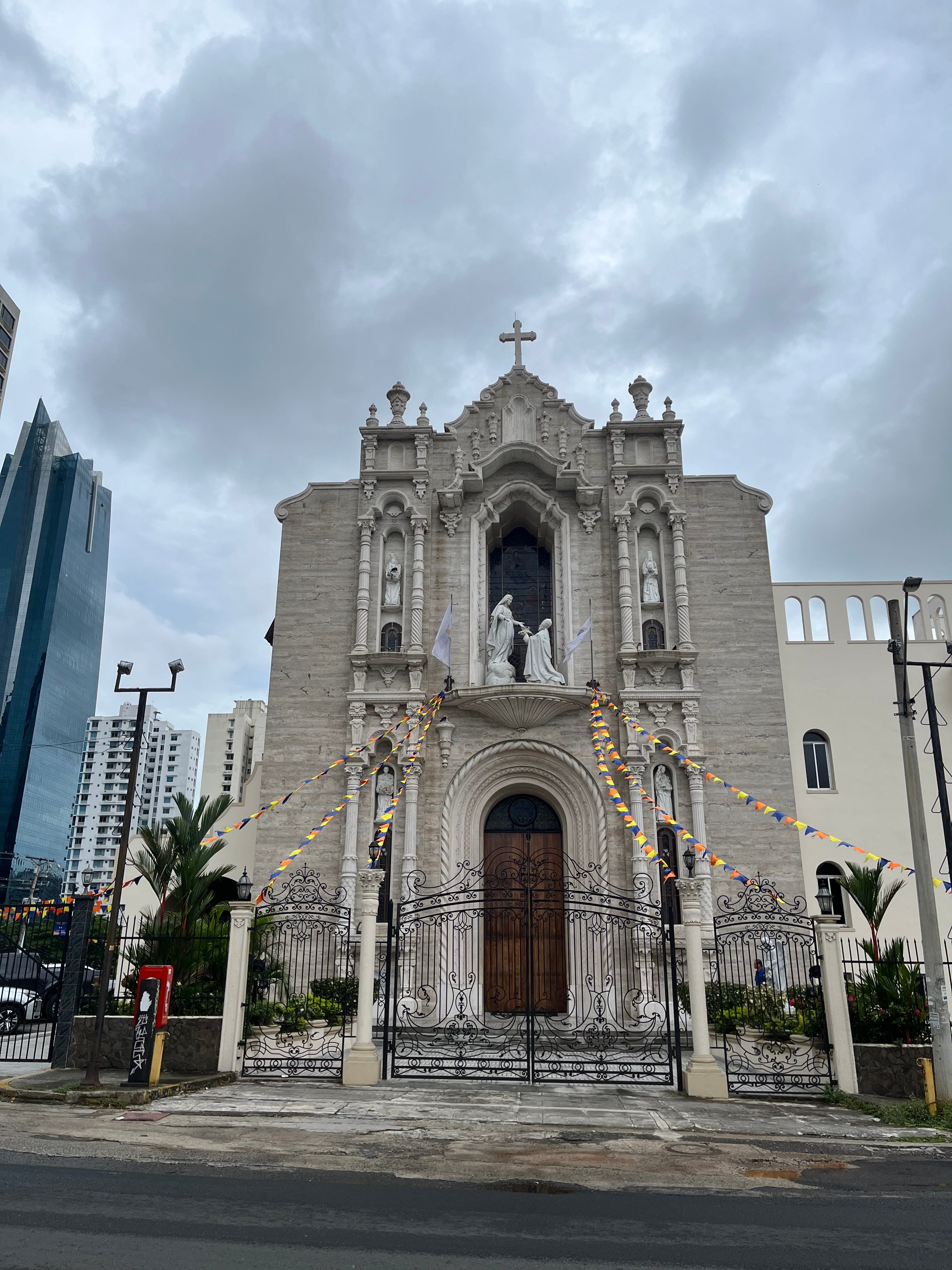
A painting of the Virgin and Infant Christ dominates the altar. Non-Catholics might scoff at Mary being so prominent in such a sacred place. But it’s tough to imagine the Mother being removed if her Infant is to be retained.
From the church, I made my way back to the JW Marriott at Punta Paitilla. As always, storms were predicted throughout the day. Upon arriving at the hotel, I was drenched. But it hadn’t rained. Being in the air was sufficient to get soaked.
The Apogee of Architecture
We joined our group for a feast at en La Fonda, a festive restaurant in Casco Viejo. Albeit a bit of a tourist trap, this popular enclave is the most appealing part of Panama City.
Several squares exhibit French and Spanish colonial architecture at their apogee. The most prominent example is Plaza de la Independencia, anchored by the neoclassical Palazo Municipal and the Iglesia de la Merced.
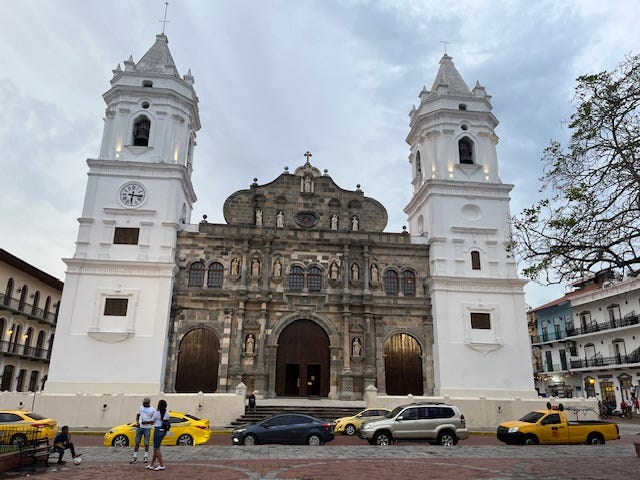
Constructed from stones Franciscan monks carried one by one from the recent ruins at Panama Viejo, the church contrasts with most Casco Viejo structures. Reminiscent of the ancestral village of the façade stones, a wooden ceiling covers the interior, with surfaces retaining architecture from Spanish Panama’s original era.
Mosaics adorn the sidewalk in front of the church, which boasts a statue of 13th-century Saint Maria de la Cervello, who posthumously sailed on wings of the wind to rescue ships at risk of wreck.
Into the Wild
The next morning was sunny, the first rays we’d seen all week. This boded well for scenery, but poorly for heat.
After visiting Miraflores Locks the previous morning, we returned to the canal. This time, we’d ride upon it…boating from the Chagres River to Gatun Lake. We slipped into the water just past the Pedro Miguel Locks.
We rode slowly thru the river before accelerating into the main channel of the Panama Canal. We slid past a container vessel going the other way, and were soon welcomed by native inhabitants.
Crocodiles sunned themselves on rocks, a sloth dangled at the top of a distant tree, and a couple species of monkey boarded our boat seeking bananas.
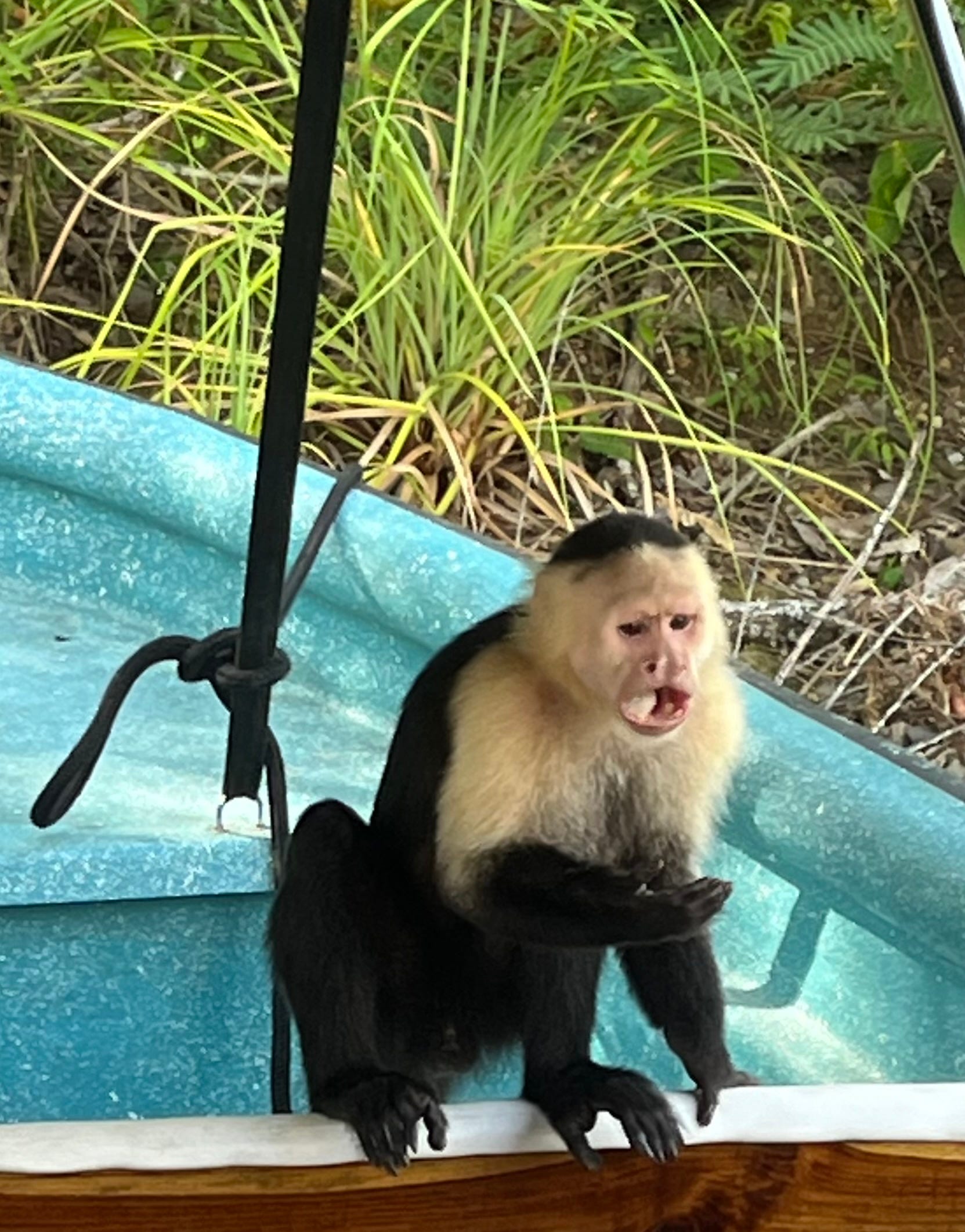
From the water we walked into the wild. A kilometer into the jungle, our hike brought us to the habitat of howler monkeys.
Their distinctive sounds were ominous, and ample droppings made their presence obvious. Several scampered and screamed in the branches above.
The wind rose as we emerged from the forest. Storms were brewing, and would douse the city after we arrived.
It Goes Quick
The night before had been more pleasant. Amid cool zephyrs off the Pacific, my wife and I reveled in the ambience of Plaza Bolivar.
The corvina arrived, and was worth the small risk of added expense. Moments like this usually are. This week, we enjoyed plenty. As the evening advanced, we became nostalgic…and introspective.
We recalled the places we’d been and things we’d done during almost thirty years of marriage. We reminisced how our sons had grown, that one is finishing his first year of college, and the other is about to complete his last.
“It goes quick, doesn’t it?”, I asked, almost wistfully.
“Yes”, my wife replied. “And that’s why you should order the fish.”
I’m glad I did.
JD
Very pleasant reading. Thanks...