


Atlanta, GA
January 26, 2026
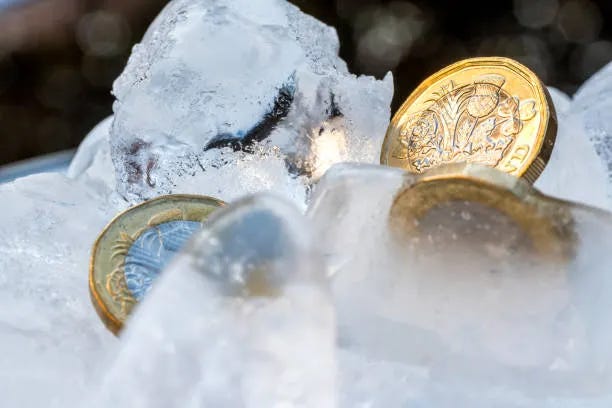
“Climate change” has hit Dixie! The US government may not be conquering Greenland. But Greenland seems to have come to us.
The air is frozen, the pavement slick, and our forest of trees is a latticework of ice. So far, the wrong limb hasn’t found the right power line, so electricity still heats, lights, and charges our home.
But we’re ready if some rogue branch breaks. Our fire logs are stacked, the wine cellar is stocked, and outside air can preserve our food.
Release Valve
For now, we enjoy red wine beside a warm fire, and take a moment to revisit my phone. Saturday I decided I’d do without it the entire day. I stayed away most of yesterday too. Today I decided to become reacquainted.
After a few hours, I realized deprivation can be a gift. On a few occasions, I instinctively reached for my back pocket like an antsy gunslinger grabbing an empty holster. But mostly, I didn’t miss this “essential” device, which tends to be a release valve for boredom.
In the dark ages of two decades ago, if we were standing in line or waiting for a friend, we’d use the time to explore our thoughts. Now we carry a computer that provides (or precludes) them for us.
I’m not suggesting smartphones are inherently detrimental. They aren’t. In most ways, they’re miraculous. But like cars, guns, tax advice, or the Internet, they’re merely tools. Often indispensable, sometimes deadly, occasionally worthless. Like hammers, hacksaws, or a keyboard, their value derives from how its used and the person who wields it.
As a writer and investor, I can research stocks, make trades, and scribble this drivel from anywhere in the world. But it’s not the phone’s fault if I go broke or annoy readers. Seeking friction to stay warm, let’s risk doing both.
Wobbly Table
Among the first scenes I saw when I revisited my screen was a video of another shooting in Minneapolis. Beneath it was an avalanche of opinions, most of which reflected prior political perspectives rather than objective assessments of what actually occurred… assuming anyone really knows.
Our devices feed us what we’re supposed to see. As with all “news” we don’t personally witness, it’s a kaleidoscope of clipped images, half truths, and total lies. Based on what we “like” or who we “follow”, algorithms draft us onto one of two teams. They then call plays for us to boo, cheer, or second-guess… to keep us divided while we ignore the owner’s box.
I have no idea what’s really happening in Minneapolis, Tehran, Kiev, or Caracas. I hardly know what my neighbors are up to. Almost no one does.
But ardent opinions instantly congeal about each new “crisis”, most of which are lesions intentionally inflicted by those who promise to salve the wound with unconstitutional ointments and financial gauze lifted from the victims.
Domestic mayhem and foreign misadventures (and the counterfeit currency that funds the mischief) may explain what’s happening with precious metals.
Ominous Harbinger
With US government debt (excluding unfunded liabilities) approaching $40T and the Japanese losing control of long-term yields, the price of gold breached $5,100. Silver crested $110.
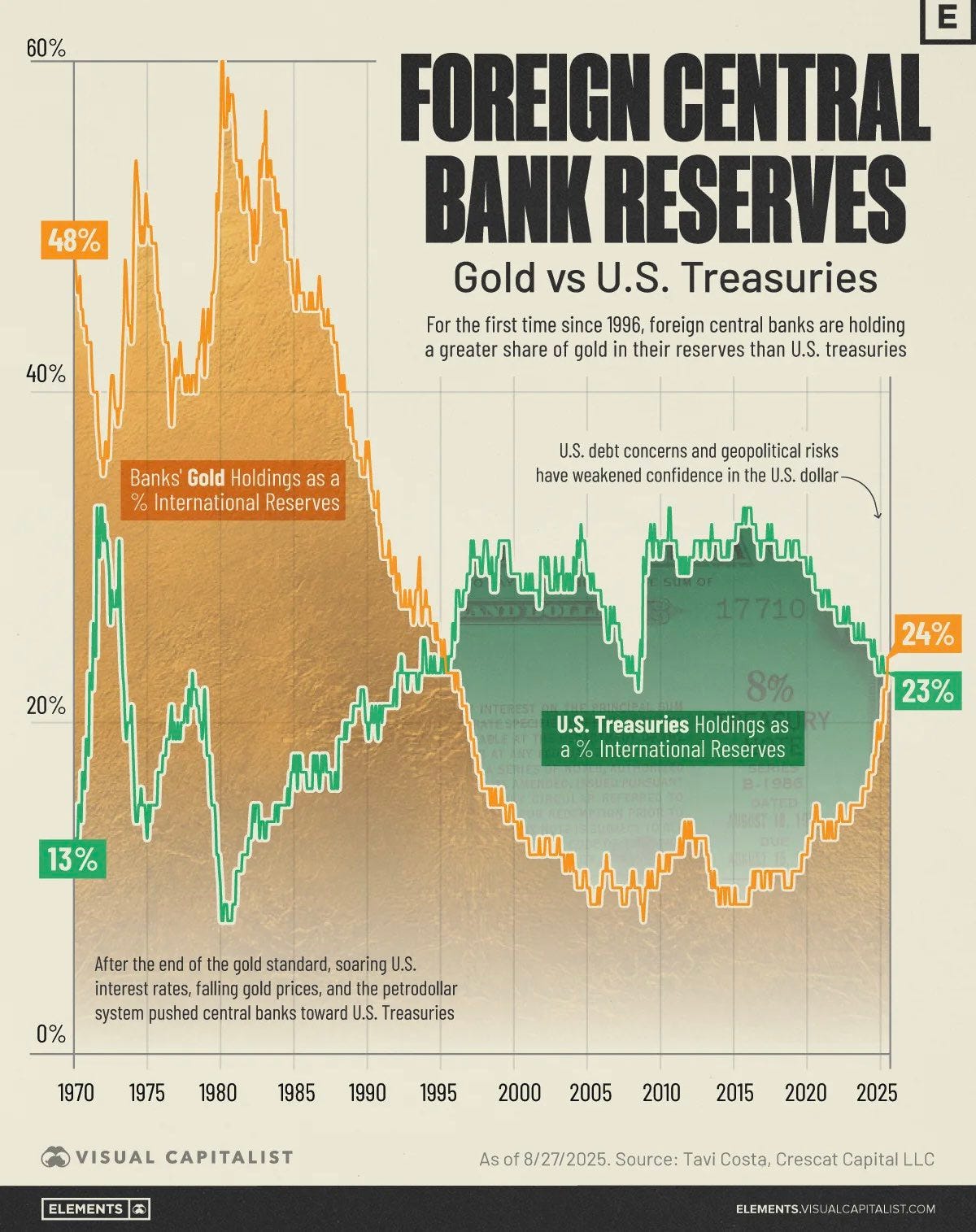
Since Trump was inaugurated, gold has almost doubled, and silver quadrupled. For the last six months… and the first time in thirty years… central banks hold more gold than Treasuries as reserves:
As with any insurance policy, gold has always been something we bought in hopes it would go down. These days, it rarely does. Silver almost seems like it can’t. After rising 12% last week, it spiked another 15% this morning (it later retreated to close up several percent).
With a large position in precious metals, I smile about these prices, but wince at what they portend. I don’t know what that is, but with all the idiocy around us, there are plenty of possibilities.
Parabolic moves may make a portfolio look good, but at these levels… like watching a congressman back off a cliff in my new Mercedes… my emotions are mixed. This price action is an ominous harbinger. But whatever it signals will require reliable energy to carry us thru.
Gaia on the Grill
With much of America in the cooler this week, the price of natural gas popped. Gas is a peak load fuel. It’s too expensive to provide base power, but is a perfect source when temperatures plummet.
With the country coated in ice, natural gas jumped almost 50% in ten days. Airy aversion to “fossil fuels” and “carbon footprints” tends to dissipate when the inevitable effect is freezing to death.
Human survival isn’t the only catalyst. Enabling their replacements is important too.
New and prospective AI data centers also require enormous power. Only hydrocarbons and nuclear energy (sufficient supply of which will take years to bring online) can provide it, which probably explains why “climate change” is no longer a pressing problem among technocratic “elites”.
It’s fine to restrict the rubes’ diet, movement, and livelihoods to “protect the planet”. But to acquire data to enhance control, even someone like Bill Gates is willing to toss Gaia on the grill.
Receding Summit
For the last decade, conventional “wisdom” held that desire for hydrocarbons had peaked and that demand would fall. This notion precipitated industry withdrawal of sustaining capital for essential infrastructure.
As with mining metals, extracting and refining oil and gas is extremely capital intensive, and for more than a decade… thanks to political pressure, ESG mandates, and environmental charlatans… investment lagged. Meanwhile, demand keeps going up.
Like Lewis and Clark reaching the Continental Divide and being stunned by endless ridges touching the horizon, events have forced analysts to acknowledge a receding summit for fossil fuels. A couple months ago, the International Energy Agency (IEA) pushed the projected peak demand out another twenty years, with prices lounging above $100 per barrel.
Many oil companies are trading at discounts to net present value at current oil prices (~$60). If IEA projections are correct (or, more likely, understated), those share prices can multiply… particularly for small or mid-cap listings in risky jurisdictions (which regrettably now includes formerly stable places like Canada and Australia).
Tho’ their ascent has been startling, I’m not planning to sell my gold or silver. But I wouldn’t be shocked if some money rotated from precious metals into oil, gas, or even (gasp!)… coal. Many of these stocks have begun to perk up. Is this a temporary blip or the start of a trend?
I don’t know.
But those wanting to ride the train need to be on board, even if it means waiting a while. Natural resource investors are used to spending years as their carriage sits idle, gathering cobwebs on rusting rails in abandoned stations.
Speculators in gold stocks spent more than a decade waiting to be right… which meant they were wrong. Until they weren’t. Such companies catch fire when they come in from the cold.
Reason Enough
Will the energy sector see similar returns after years languishing? Some pockets probably will. Others console us with enticing dividends while we wait. I could be wrong (like most of us, I usually am), but I don’t think it’ll take long to find out.
By demonizing essential hydrocarbons that keep us alive, climate cultists have done considerable damage in religious deference to their deadly fad. For people who enjoy heated homes, lighted rooms, functioning hospitals, and indulging the habit of eating every day, oil, coal, and natural gas are indispensable.
These resources allow the world to sustain eight billion people. They efficiently pick, preserve, and deliver their food; they enable them to move quickly across town or around the globe; and they permit pompous blowhards to type tedious essays on a small screen.
Which may be reason enough for most readers to put their phones away.
JD
I question the narrative of 8 billion people on this planet with the plummeting birth rates and the long standing Chinese one child policy...we need a deep dive into the (over) population myth.
Yes, I to have grown accustomed to eating regularily. As many in North America have. Without this fuel source , it would certainly slow that eating process down.