


Paris, France
July 4, 2026
“[W]henever any Form of Government becomes destructive of these ends, it is the Right of the People to alter or to abolish it.”
- Declaration of Independence
“Thomas Jefferson still survives.”
- John Adams, July 4, 1826
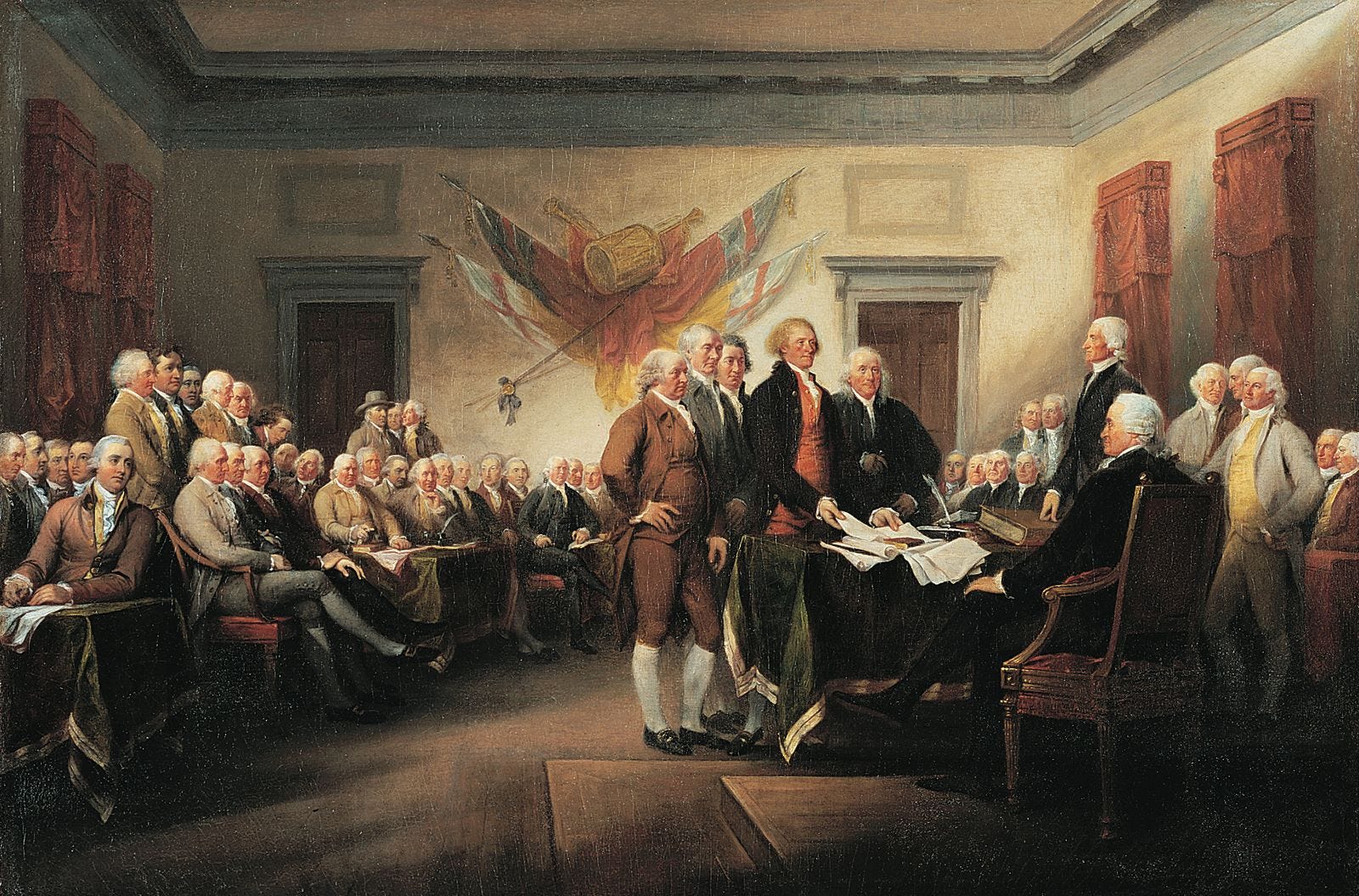
Two hundred years ago today, Thomas Jefferson died. A few hours later, John Adams joined him on the eternal journey. Fifty years earlier, the Declaration of Independence was adopted.
As we’ve repeated in several recent essays (e.g., here and here), today isn’t a “birthday”; it’s an anniversary. Lincoln notwithstanding, nothing was born, founded, or established in Philadelphia on July 4, 1776. State governments already existed, and no central one was created.
Natural rights and Enlightenment language provided rationale for the Declaration. But they weren’t its purpose - which was to sway the “opinions of mankind” (especially those of France, the country they most needed to persuade) while “proclaiming the causes that impel the separation”.
But it would require a vicious war to earn acceptance, and a vital alliance to ensure victory.
French Connection
Across the ocean, The Marriage of Figaro was forbidden in France, as an insurrectionary play that threatened the regime. As time would tell, the King and Queen were right to be worried.
But not yet.
The play’s author, Pierre-Augustin Caron de Beaumarchais, ran a sham trading company… secretly funded by the French government… that covertly funneled muskets, gunpowder, and uniforms to the Continental Army. He enthusiastically urged Foreign Minister Vergennes to support the seceding states.
An aristocratic monarchist, Vergennes was wary of the colonial uprising. But because of their opponent, he found it difficult to suppress a smile or withhold assistance.
France had lost its North American colonies after succumbing to Britain in the Seven Years War, and was anxious for revenge. It was also worried that a British victory would further strengthen the Royal Navy, which could cripple French shipping and capture its colonies in the Caribbean.
An expectation of French aid encouraged the colonists to issue the Declaration. When the document was adopted, France welcomed it. During the preceding century, its philosophers helped seed the ground from which it grew.
Voltaire, Diderot, Montesquieu, and Rousseau had influenced American thinkers, and prepared the French Enlightenment to support the colonists. The philosophes were elated when the Declaration was translated into French and printed in Paris.
Many of France’s military were eager to help. Silas Deane noted that he was “harassed to death with applications” from French officers wanting to fight in America.
The Marquis de Lafayette slipped out of France to do so under Washington. He was nineteen, married to a pregnant wife, yet (or therefore?) he snuck away to serve without pay. The Comte de Rochambeau led the French Expeditionary Force, and Admiral de Grasse cornered Cornwallis in Chesapeake Bay.
After Gates’s victory at Saratoga, implicit sympathy became overt assistance. France recognized the new states, and joined the war as their ally. This assistance was indispensable to the Americans… yet fatal to French regime.
Not a Revolution
At Versailles, sober minds issued words of warning that were mostly ignored. Turgot insisted that joining the war would be ruinous. Jacques Necker trembled for a budget he’d been struggling to balance.
To his later regret, King Louis reluctantly brushed them aside. While understandably (and prophetically) worried about assisting a “revolution”, the monarchy was more concerned with harming Britain than with sustaining itself.
Nietzsche said that which is bound to fall deserves to be pushed. The War for Independence was the shove that sent the Ancien Regîme over the edge.
Within a decade of the Treaty of Paris, bankrupted by more than a century of extravagance and war, the Royal Treasury collapsed, the Bastille fell, Versailles was stormed, the monarchy toppled, and the royal couple was decapitated.
The French Revolution probably would’ve happened anyway. But France’s meddling in America shortened the fuse.
Unlike the later upheaval in France, the American War for Independence wasn’t a “revolution”. The colonists cherished English liberty embodied in the Magna Carta and Bill of Rights, and accused Parliament of violating their inherent prerogatives as British citizens.
They wanted to preserve the tradition of self government, not to rip it out by the roots and replace it with cut flowers of contrived customs, central authority, and egalitarian ideology.
Day of Tiles
The difference is illustrated by a 1788 event in Grenoble, more than a year before the Bastille fell. The local parlement had refused to obey a royal edict. The king’s soldiers were deployed to enforce the orders, yet were commanded not to shoot.
But the locals attacked the troops by tossing tiles at them. One regiment reflexively fired without orders, killing two people, including a 12 year-old boy.
The mob paraded the victims’ blood-soaked clothes thru the streets, and rang the tocsin of the cathedral to stoke alarm. The rioters destroyed property, assaulted innocents, and propelled the instigators into the new National Assembly.
Like the Boston Massacre, the Grenoble “day of tiles” was a spark that led to a larger conflagration. But compare how the two events were handled.
When the British troops fired on rowdy Bostonians, John Adams (who’d be among the main proponents of independence) defied popular opinion, defended the soldiers in court, and obtained their acquittal under established law.
The whole point of the French Revolution was to ditch tradition and overturn established law. Had John Adams tried to uphold centuries of custom during that uprising, he’d literally have lost his head.
The Declaration of Independence didn’t intend to invent new principles. It was simply an announcement of, and justification for, the simultaneous secession of a dozen states that already existed (Rhode Island had separated from Britain two months earlier).
The document was, as Jefferson called it, “an expression of the American mind”, of sentiments shared by thirteen separate societies submitting “the common sense of the subject” to the rest of the world.
The Treaty of Paris ending the War for Independence didn’t recognize a new American “nation”. No such thing existed, nor was it widely desired. Britain recognized thirteen sovereign states, each no different than Spain, France, Sweden, or Russia. That’s why they were called “states”.
“My Country”
With the war over and independence won, Thomas Jefferson spent five years in France. He recalled them fondly as among the happiest in his life.
He famously said that among countries, France must be everyone’s second choice after his own. But by “his own”, Jefferson didn’t mean an amalgamated “United States”.
He meant Virginia, which he always called “my country”. That’s how most Americans felt. The idea that their home state was subordinate to an abstract “union” the states created would’ve seemed absurd. Centralized consolidation and distant overlords is what they were fighting against.
But when he returned from France, Jefferson was appalled. The philosophical wind had shifted while he was gone. Prevailing attitudes and the new government seemed to undermine the principles of the Declaration he wrote.
Shay’s Rebellion had been hyped-up to scare delegates in Philadelphia into replacing the Articles of Confederation with a new Constitution. With talk of debt consolidation, a “national” bank, and standing armies, centralizing tendencies were in the air. In ensuing decades and centuries, it would get worse.
From his perch in Paris, Jefferson had been apprehensive about the new Constitution. In correspondence with James Madison, he offered reluctant endorsement, but only if a Bill of Rights were added.
It was a nice thought. But it didn’t work. To the central government, like a raging river to an expanding ocean, has come a steady stream of more power, almost all of it illegitimate.
Jefferson resisted early currents with the Kentucky Resolutions, among the best things he ever wrote. In them he asserted the sovereignty of the states, and their right to nullify unconstitutional laws within their borders.
This seems like common sense. But the author of the Declaration of Independence is now mostly condemned for that sensible opinion, despite being consistent with the famous document Americans claim to revere.
Given the confusion about what the Declaration of Independence really means, it’s probably time to issue another one. But how many Americans would still know what to say?
JD
This is a fantastic perspective. Forgotten history. Thanks
🎯🎯🎯 👍👍👍 💥💥💥 !!!
Pretium Insights indeed !!!
Thanks again for the priceless history-lesson !!!